
Modular sensor kits for configurable monitoring stations
Aernode Sensor Kits include the Core Sensor Board and the Sensor Deck: replaceable sensing assemblies used to configure, upgrade and service Aernode devices over time.
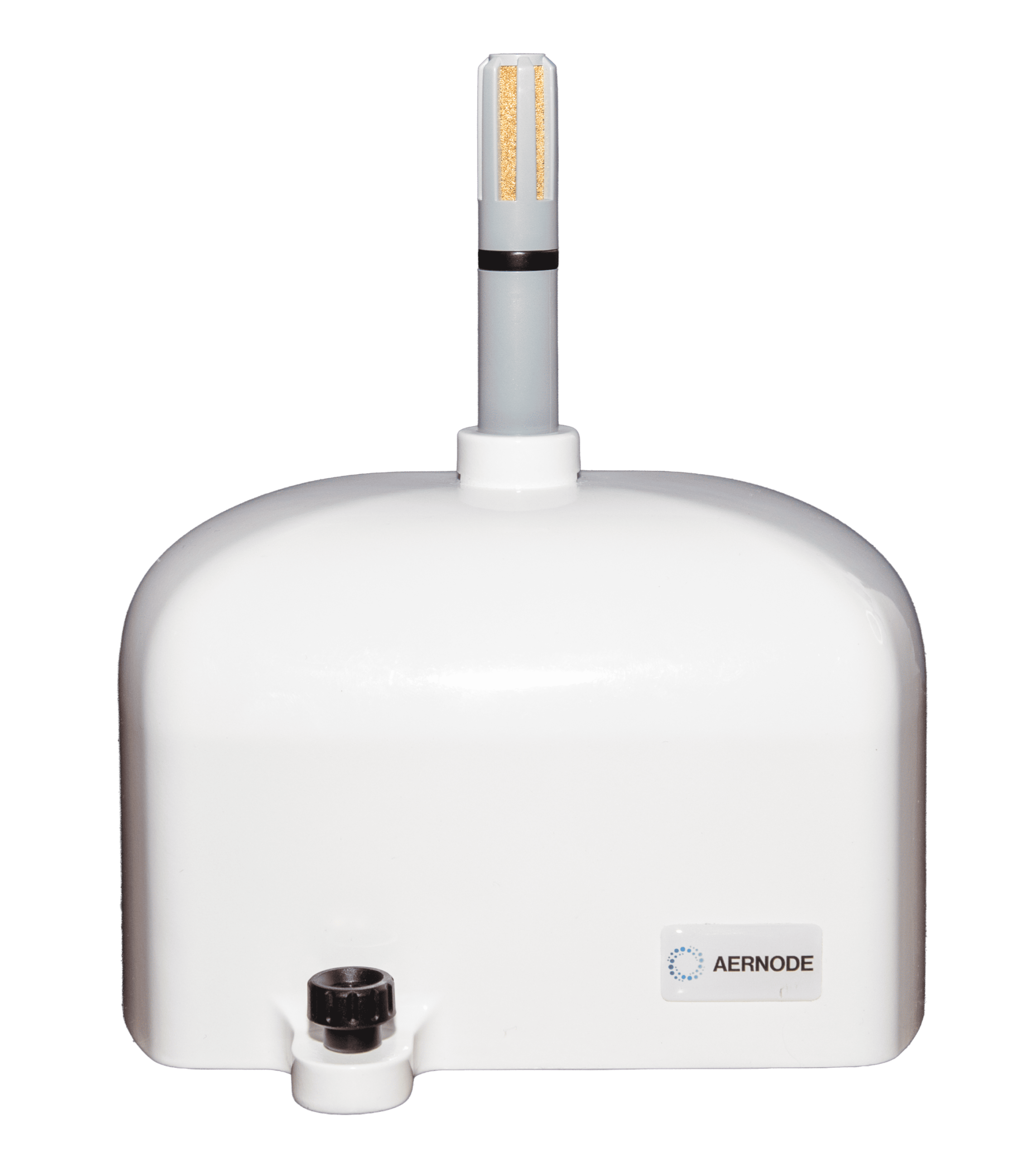
Core Sensor Board
Hosts durable sensing elements, designed for long service life and occasional maintenance when required.
Sensor Deck
Adds configurable gas sensing capacity and supports rapid field replacement for specific monitoring needs.
Configured for deployment, replaceable for service
Sensor Kits define how an Aernode station is configured for a specific monitoring need and how its sensing assemblies can be maintained or replaced over time without changing the full device.
Core Sensor Board
Sensor Deck
Configure sensing setup
Configure sensor kits according to the target pollutants, monitoring scenario and sensing capacity required by your monitoring project.
Plan long-term service
Plan service activities for multi-year deployments in line with sensor lifecycle, making maintenance needs more predictable over time.
Swap kits in the field
Install preconfigured replacement kits directly on site, simplifying logistics, speeding up field service and minimizing station downtime.
Sensing configurations for monitoring needs
Aernode configurations combine the Core Sensor Board and, when required, the Sensor Deck to match different monitoring objectives and application-specific sensing needs.
Urban air quality network
Distributed networks, urban pollution assessment and local air quality hotspots.
Industrial & fenceline monitoring
Site boundaries, industrial perimeters and sensitive areas near emission sources.
Odour & event-based monitoring
Temporary campaigns, odour reports, event monitoring and source investigation.
Construction & dust monitoring
Construction sites, dust-related activities, temporary works and perimeter monitoring.
Final sensor selection depends on the selected Aernode configuration, target pollutants, operating conditions and project requirements.
Frequently asked
questions
Technical answers on sensor configuration, gas sensing, field replacement and sensor lifecycle.
What are Aernode Sensor Kits, and how do the Core Sensor Board and Sensor Deck differ?
Aernode Sensor Kits are the two replaceable sensing assemblies used inside the monitoring station: the Core Sensor Board and the Sensor Deck. They are separate modules that can be configured, serviced and replaced independently.
The Core Sensor Board hosts sensing technologies typically characterized by longer operating lifetimes, including particulate matter, CO2, T.VOC Index and sound level measurement options. The Sensor Deck is Aernode's configurable gas sensing module and is used primarily for electrochemical gas sensors, together with PID-based VOC sensing.
Keeping the two assemblies separate allows each sensing layer to be maintained according to its own operating lifecycle without replacing the complete Aernode monitoring station.
Which gases can be monitored with the Aernode Sensor Deck?
The Sensor Deck supports a broad range of gas sensing options. Current configurations include ambient-air pollutants such as NO2, O3, CO, SO2, NO and H2S, as well as application-specific gases such as NH3, CL2, HCl, HCN, H2O2, PH3 and ETO. PID-based VOC measurement is also supported.
The exact combination depends on whether the station is Aernode Lite or Aernode Pro, the sensor technologies selected and the requirements of the monitoring project.
How do I choose the right gas sensors for a monitoring project?
The correct gas sensor should be selected according to the target pollutant, expected concentration range, required sensitivity, environmental conditions, possible cross-sensitivities, operating life and calibration strategy.
Different sensing technologies or sensor families may be appropriate for the same pollutant depending on whether the objective is low-concentration ambient monitoring, event detection or a more application-specific measurement. Sensor selection should therefore be treated as part of the project design rather than as a simple checklist of available gases.
Can Aernode Sensor Kits be replaced in the field?
Yes. Both the Core Sensor Board and the Sensor Deck are designed for tool-free field replacement.
The operator removes the station solar shield and releases the relevant assembly using the integrated hand-operated fasteners, without dismantling or replacing the complete monitoring station. This allows routine sensing-layer maintenance to be performed on site and helps reduce operational downtime across distributed monitoring networks.
Are replacement Aernode Sensor Kits ready for field installation?
Yes. Replacement Sensor Kits are supplied as complete, preconfigured assemblies with the required sensors already installed and baseline calibration parameters loaded.
After the assembly is physically replaced and the station is powered, Aernode automatically recognizes the installed module and its configuration, allowing measurements and data transmission to resume without manual provisioning by the user.
How long do electrochemical gas sensors typically last?
Operating life varies by gas, sensor family, environmental conditions and exposure. Electrochemical gas sensors used in Aernode configurations typically have an operating life of around one to three years depending on sensor technology and field exposure.
Actual replacement timing should therefore be based on the specific sensor and its observed performance rather than on one fixed interval applied to every gas measurement.
What can affect the performance of electrochemical gas sensors outdoors?
Outdoor electrochemical gas measurements can be influenced by temperature, humidity, baseline drift, cross-sensitivities, pollutant concentration range and long-term sensor ageing.
Performance can also become more uncertain when concentrations approach the lower operational range of the sensor. Appropriate sensor selection, calibration, environmental compensation and periodic performance checks are therefore important for long-term monitoring, particularly in low-concentration ambient applications.
Need detailed sensor specifications?
Access the key technical documents or contact our team to define the right Sensor Kit configuration for your Aernode monitoring project.