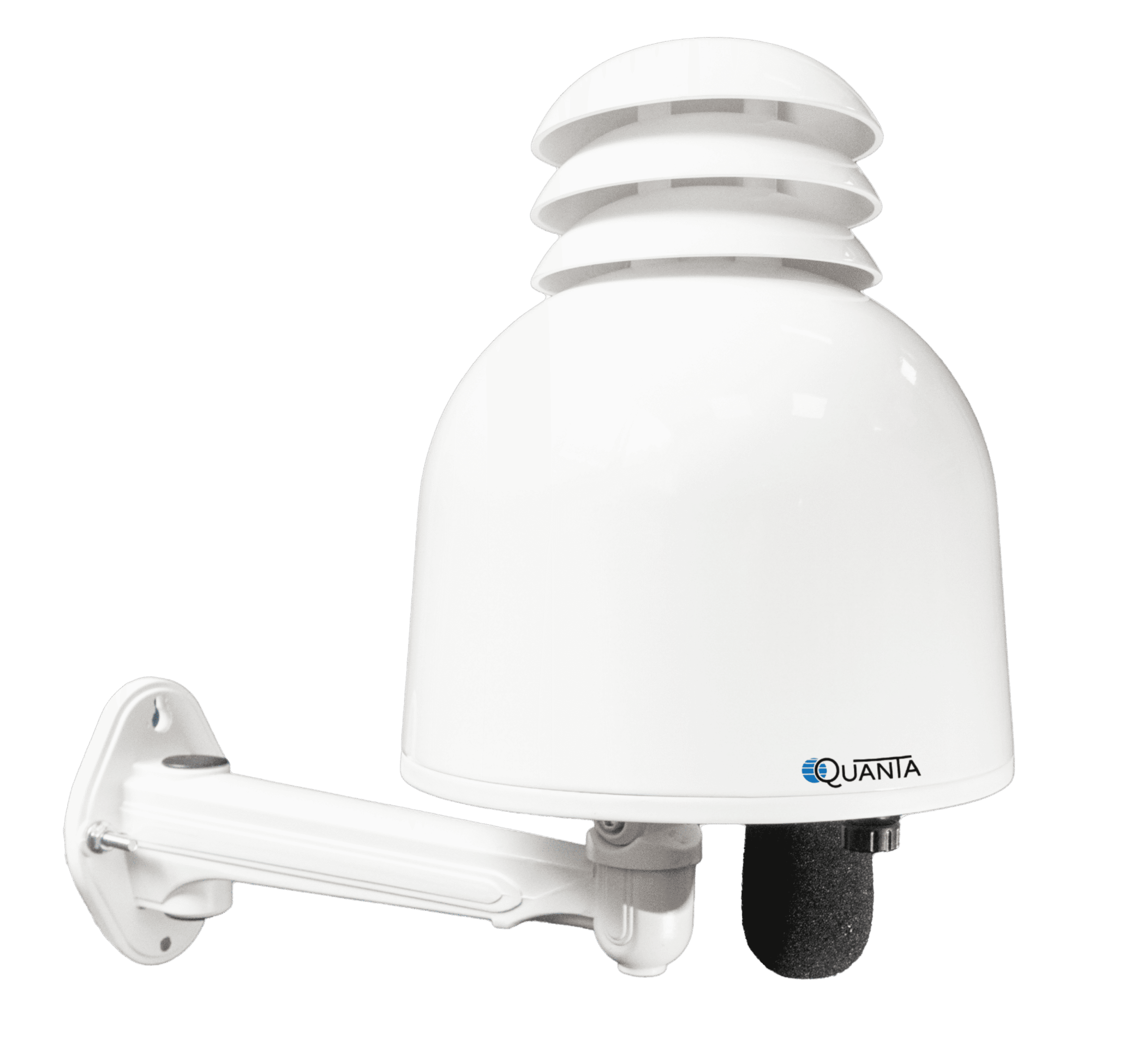
Air quality monitoring for sustainability programmes
Sustainability strategies increasingly require measurable environmental data to understand local conditions, track progress and communicate environmental performance with greater transparency. Aernode provides continuous, distributed air quality monitoring across facilities, campuses and project areas, creating structured time-series data to support environmental KPIs, compare locations and reporting periods, evaluate changes associated with sustainability initiatives and strengthen stakeholder reporting.
Continuous insight for measurable environmental performance
Sustainability programmes increasingly depend on consistent environmental data that can be tracked over time rather than on isolated measurements alone. Continuous air quality monitoring creates a persistent record of local conditions, helping organisations establish baselines, identify trends and compare environmental performance across locations and reporting periods.
Distributed monitoring can be deployed across facilities, campuses, operational sites and project areas, with measurements reviewed alongside meteorological information and relevant operational context. The resulting time-series data can support environmental KPIs, evaluation of sustainability initiatives, multi-site comparison and more transparent reporting and communication with internal and external stakeholders.
Turn continuous environmental data into measurable sustainability insight
Continuous air quality data provides a consistent evidence base for tracking environmental conditions, comparing performance and supporting sustainability programmes with measurable information over time.
Establish environmental baselines
Continuous measurements create a structured record of local air quality conditions, providing a baseline against which future trends, changes and environmental initiatives can be reviewed.
Support measurable environmental KPIs
Time-series measurements can contribute to environmental indicators based on monitored parameters, locations and reporting periods, helping organisations move from qualitative objectives towards measurable environmental tracking.
Compare sites and reporting periods
Standardised monitoring across multiple facilities or project areas makes it possible to compare locations, follow seasonal and annual variations and build a more consistent environmental dataset across an organisation.
Evaluate sustainability initiatives
Consistent measurements before and after operational, mobility, infrastructure or environmental initiatives provide additional evidence for reviewing how local environmental conditions evolve following implementation.
Strengthen reporting and communication
Structured environmental records can support sustainability reports, internal reviews and stakeholder communication with transparent, traceable data on monitored conditions and how they change over time.
A monitoring network designed around sustainability objectives
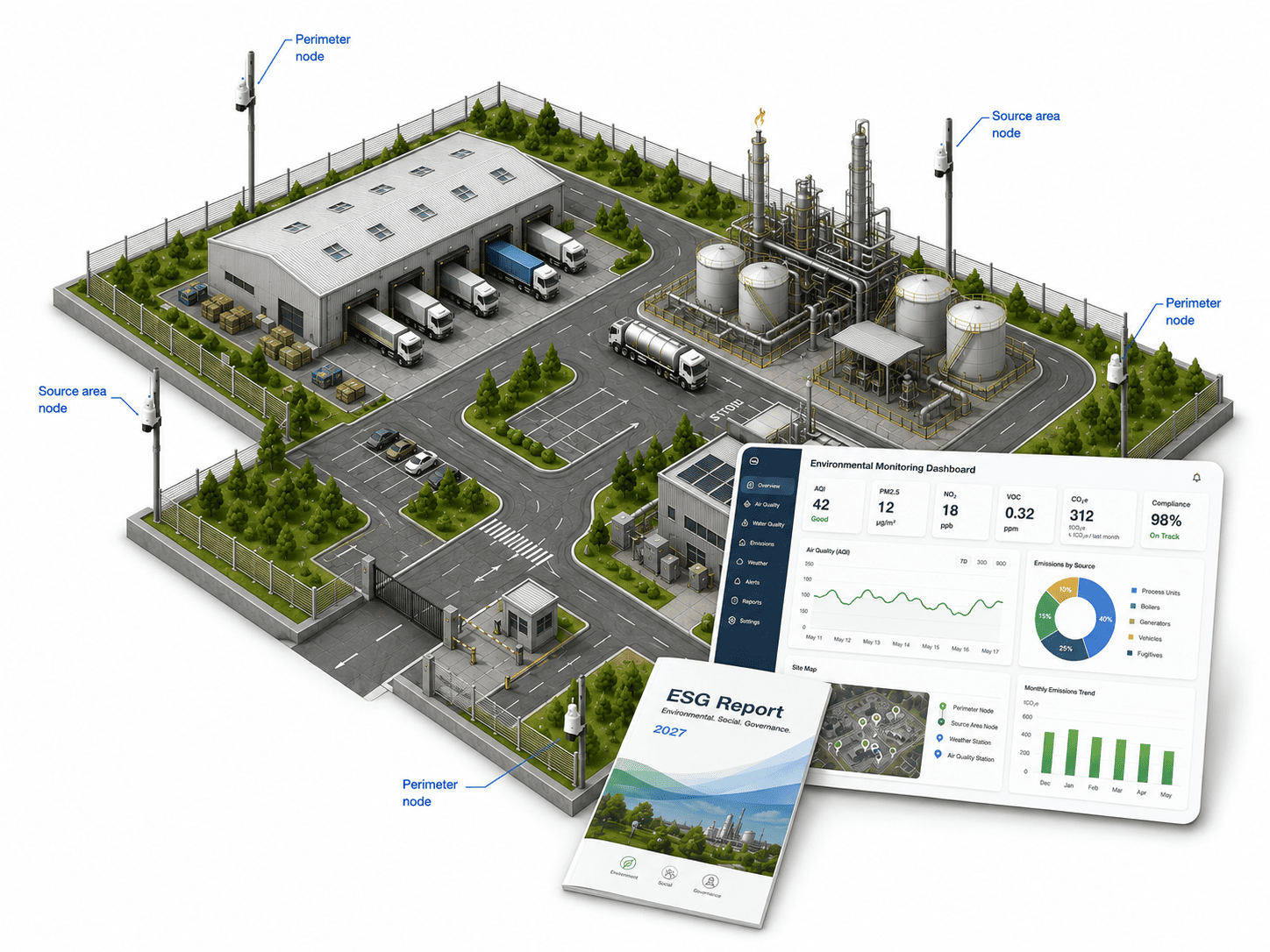
Each deployment is configured around the environmental indicators, locations and reporting objectives that matter to the organisation, creating a consistent monitoring framework that can be applied across individual facilities or extended to multiple sites.
Define the environmental objectives
Identify the environmental parameters, baseline conditions, trends or sustainability initiatives the monitoring programme should help track, together with the locations and reporting periods required for meaningful comparison.
Build a consistent monitoring framework
Select the relevant parameters and representative monitoring locations across facilities, campuses or project areas, using a consistent approach that supports comparison between sites and measurement periods.
Connect monitoring with reporting
Organise continuous measurements, meteorological information, dashboards and reporting outputs into a structured data workflow that supports environmental KPIs, period comparisons, sustainability reviews and stakeholder communication.
Environmental parameters for sustainability monitoring programmes
| Parameter | How it can support sustainability monitoring |
|---|---|
|
PM₂.₅ / PM₁₀
Particulate matter
|
Particulate matter is a widely used ambient air quality parameter and can provide a consistent basis for tracking local conditions across facilities and project areas. Continuous measurements support baseline definition, trend analysis and comparison between locations and reporting periods. |
|
NO₂
Nitrogen dioxide
|
Nitrogen dioxide provides information on local combustion-related air quality conditions and may be relevant around facilities, mobility infrastructure and areas influenced by road traffic. Consistent monitoring allows trends and differences between sites or periods to be evaluated over time. |
|
O₃
Ozone
|
Ozone provides additional ambient air quality context and is influenced by atmospheric chemistry, meteorology and regional conditions. Long-term measurements can help characterise seasonal patterns and provide broader context when comparing environmental conditions across locations. |
|
dB
Environmental noise
|
Environmental noise can complement air quality measurements with an additional indicator of local environmental conditions. Monitoring over time can support comparison between sites and help evaluate changes associated with mobility, infrastructure or operational initiatives. |
|
Meteo
Meteorological parameters
|
Temperature, humidity, wind and other meteorological variables provide essential context for interpreting air quality measurements and separating environmental trends from changes associated with weather, season or local conditions. |
Monitoring configurations are project-specific; particulate matter, NO₂, O₃, environmental noise, meteorological variables and other compatible parameters can be selected according to sustainability objectives, site characteristics and reporting requirements.
Explore the Aernode Components
Aernode Monitors
Configurable outdoor stations for continuous measurement of particulate matter, gaseous pollutants and environmental conditions across distributed monitoring networks.
- Site-specific pollutant configurations
- Continuous outdoor data acquisition
- Designed for single-site and multi-node networks

Aernode Cloud
A central environment for device supervision, data storage, post-processing and secure access to current and historical monitoring information.
- Remote network and device management
- Historical records and data continuity
- Authenticated integration through APIs
Sensor Kits
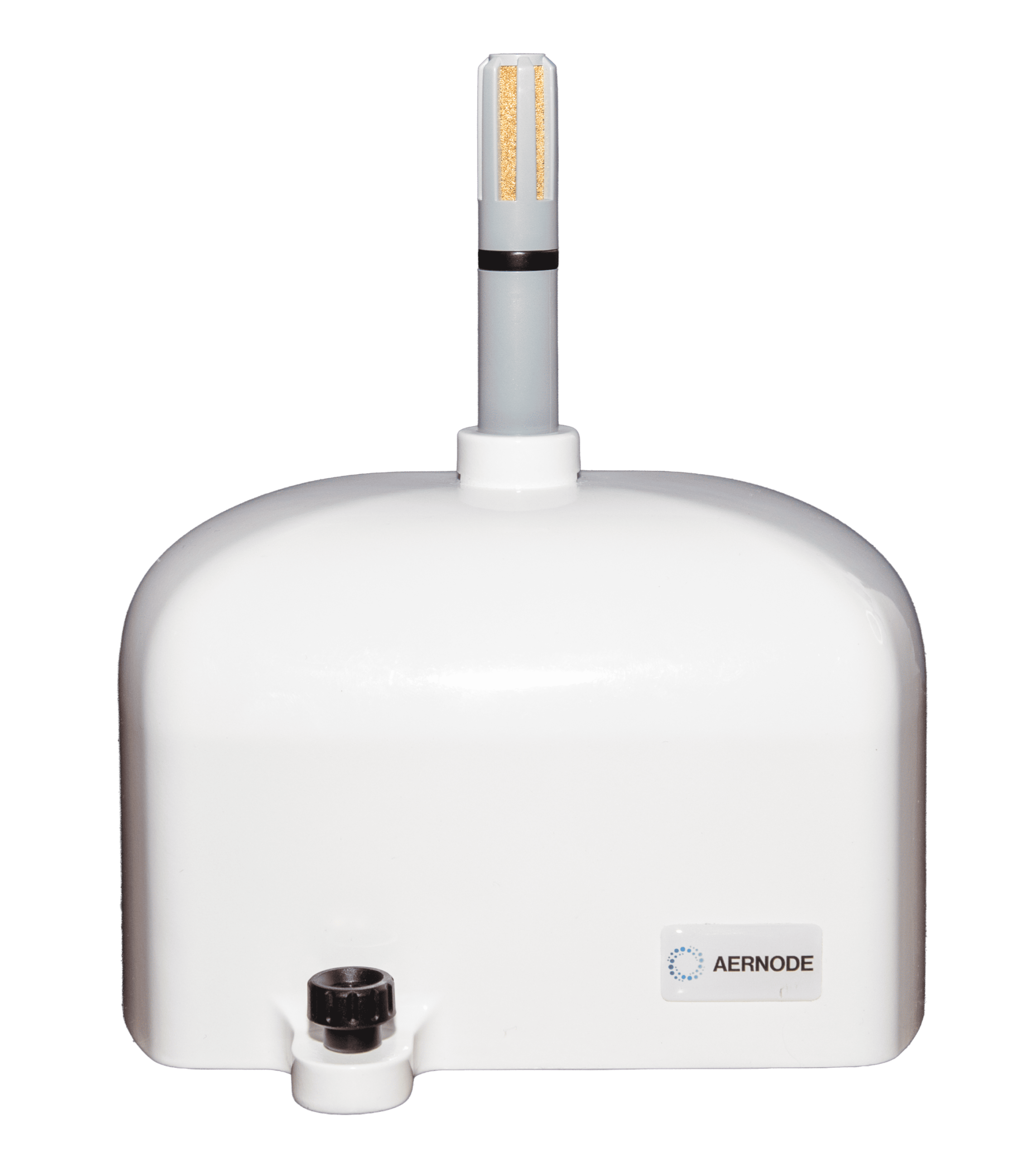
Preconfigured sensing assemblies that simplify pollutant selection, field servicing and configuration updates throughout the operating life of the network.
- Modular pollutant combinations
- Efficient field replacement
- Configuration tailored to project requirements
Reporting Tools
Digital environments for current conditions, historical analysis, automated outputs and communication with internal teams or external stakeholders.
- Real-time and historical dashboards
- Threshold alerts and scheduled reports
- Private and stakeholder-facing environments
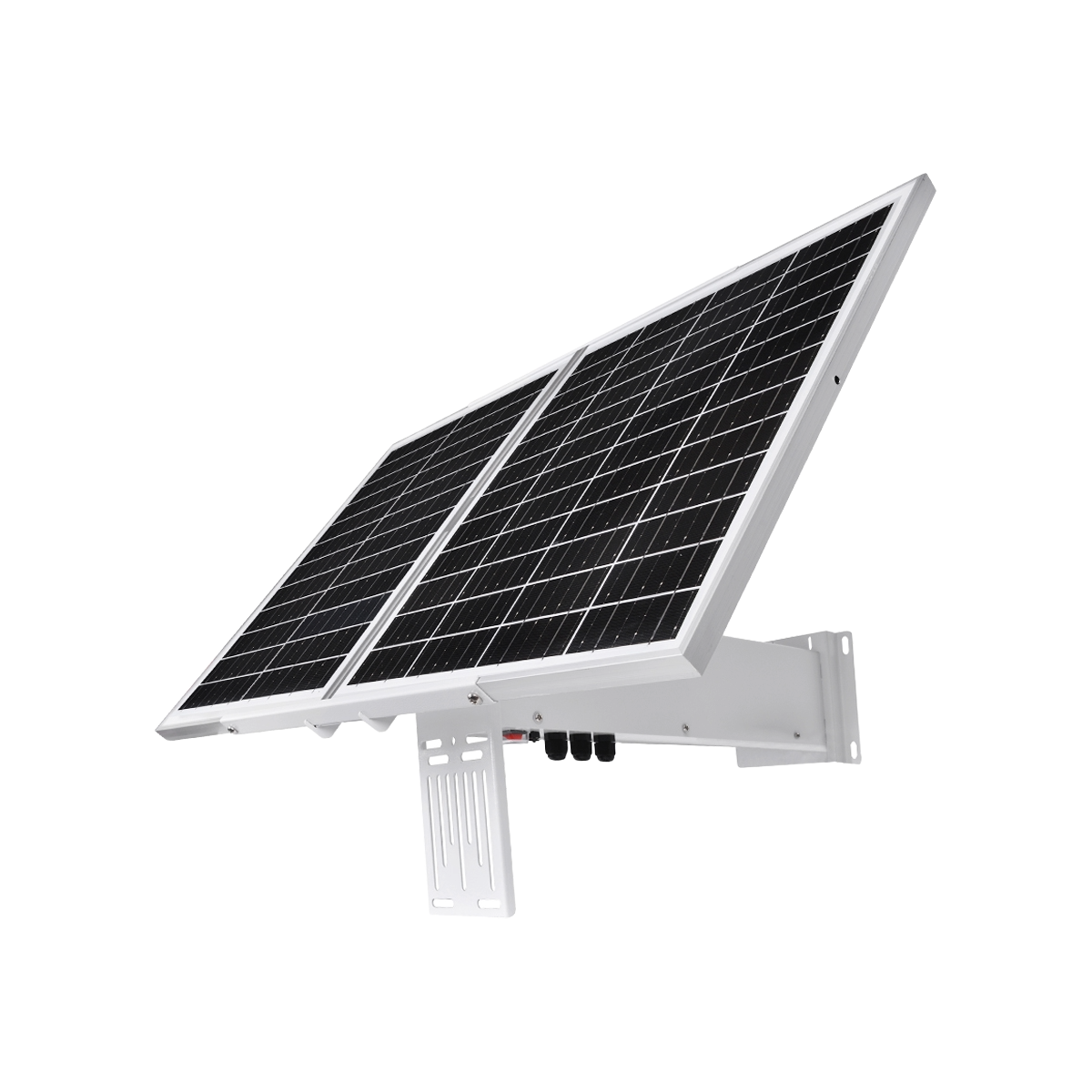
Accessories
Power, meteorological, mounting and connectivity options for fixed-site, perimeter and off-grid monitoring configurations.
- Weather stations and anemometers
- Solar power and autonomous deployment options
- Mounting and connectivity accessories
Build an air quality monitoring programme for your sustainability strategy
Define the right environmental parameters, monitoring locations, connectivity and reporting workflow to establish baselines, track trends, compare sites and integrate continuous air quality data into your sustainability programme.