Intensive farming

Air quality monitoring for intensive farming

Intensive livestock farming can create variable environmental conditions linked to animal housing, ventilation, manure handling and storage, feed operations and vehicle movements. Aernode provides continuous monitoring across relevant farm areas and site boundaries, helping operators follow changes in ammonia, particulate matter and other environmental parameters, review reported odour episodes and relate observed conditions to farm activity and meteorology.

Continuous intensive farming monitoring

Continuous insight for proactive environmental management

Environmental conditions around intensive livestock facilities can change with animal housing, ventilation patterns, manure handling and storage, feed operations, vehicle movements and meteorological conditions. Continuous monitoring provides a persistent record of parameters such as ammonia and particulate matter, helping operators identify recurring patterns and review how conditions vary across different areas and periods of activity.

Monitoring nodes can be positioned around livestock buildings, manure or storage areas, site boundaries and nearby receptors. Measurements can then be reviewed alongside farm activities and local meteorology to provide additional context for changing conditions and reported odour episodes. The resulting data supports operational review, mitigation planning and structured communication with authorities, neighbouring communities and other stakeholders.

Operational value

Operational value of continuous intensive farming monitoring

Continuous environmental data helps operators review changing conditions, understand recurring patterns and support day-to-day environmental management around intensive livestock facilities.

01

Continuous environmental oversight

A distributed network provides an ongoing record of selected parameters across livestock buildings, manure handling and storage areas, site boundaries and other relevant locations, revealing variations that periodic measurements may not capture.

02

Better context for odour-related events

Measurements of ammonia and other relevant environmental parameters can be reviewed alongside manure handling, ventilation, farm activities and meteorological conditions to provide additional context when odour episodes are reported.

03

Active monitoring with configurable alerts

Configurable thresholds can highlight changes in monitored parameters, giving operators an additional signal to review farm activities, ventilation conditions, manure management or meteorological factors during relevant periods.

04

Evaluate operational and mitigation measures

Comparing measurements across locations and operating periods can help assess how environmental conditions change following ventilation adjustments, manure-management practices or other measures intended to reduce local impacts.

05

Structured data for reporting and communication

Consistent time-series records support internal environmental reviews, documented follow-up of reported events and evidence-based communication with authorities, neighbouring communities and other stakeholders.

Monitoring network deployment

A monitoring network designed around farm activities and receptors

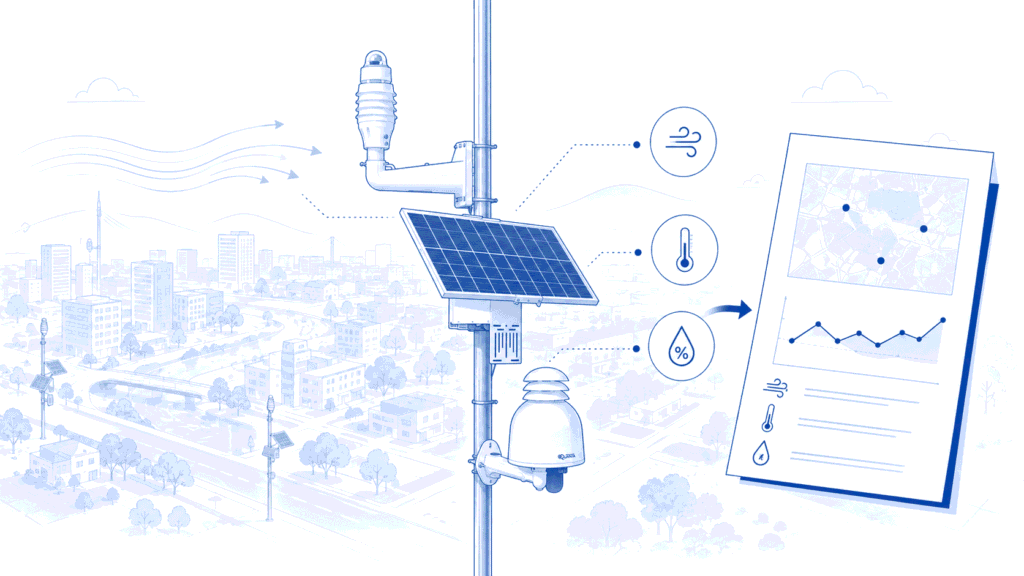
Each deployment is configured around livestock buildings, ventilation outlets, manure handling and storage areas, site boundaries, prevailing winds and nearby receptors, so measurements provide useful context for day-to-day environmental management and the review of changing conditions.
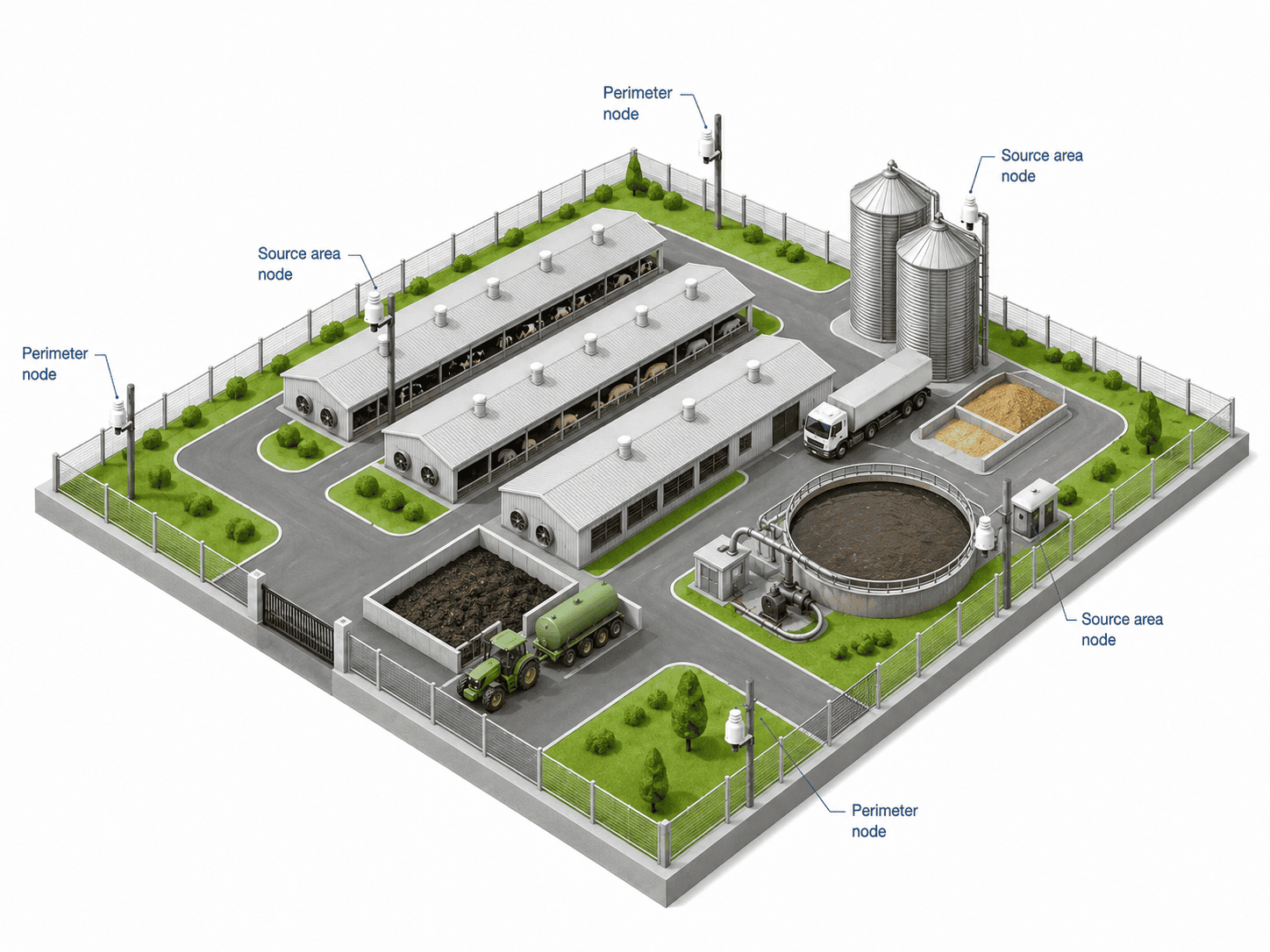
Aernode monitoring network deployment for an intensive farming site
01

Define the monitoring objectives

Identify the farm areas, site boundaries and nearby receptors most relevant to the monitoring programme, and define the parameters and environmental conditions the network should help operators review.

02

Configure and position the network

Select the relevant environmental parameters and position monitoring nodes around livestock buildings, ventilation outlets, manure handling or storage areas and site boundaries, taking prevailing winds and nearby receptors into account.

03

Establish the operational workflow

Connect measurements with dashboards, configurable alerts, meteorological data and reporting outputs so operators can compare locations, review changing conditions and reported episodes, and maintain a structured environmental record over time.

Key environmental parameters

Parameters commonly monitored around intensive livestock farms

Parameter Why it matters in intensive farming environments
NH₃ Ammonia
Ammonia is a key environmental parameter around intensive livestock farming and can vary with animal housing, ventilation, manure handling, storage and other farm activities. Continuous monitoring helps operators review concentration patterns across relevant areas and different operating conditions.
PM₂.₅ / PM₁₀ Particulate matter
Particulate matter can be influenced by feed and bedding materials, ventilation exhaust, animal activity, vehicle movements and surrounding agricultural operations. Distributed monitoring helps compare dust conditions across farm areas, boundaries and nearby locations.
H₂S Hydrogen sulphide
Hydrogen sulphide may be relevant around manure and slurry handling or storage areas where anaerobic conditions can occur. Monitoring can provide additional information on concentration variations and context when changing or odour-related conditions are being reviewed.
VOCs Volatile organic compounds
Volatile compounds can vary with manure management, organic material, feed-related activities and other processes around livestock facilities. VOC indicators can provide additional context for changing environmental conditions and the review of reported odour episodes.
Wind Speed and direction
Wind speed and direction provide essential context for interpreting measurements around livestock buildings, manure areas, site boundaries and nearby receptors, particularly when reviewing spatial patterns or reported environmental episodes.

Monitoring configurations are project-specific; NH₃, particulate matter, H₂S, VOC indicators and meteorological parameters are selected according to livestock activities, site characteristics and monitoring objectives.

Solution stack

Explore the Aernode Components

Aernode air quality monitor
Field monitoring hardware

Aernode Monitors

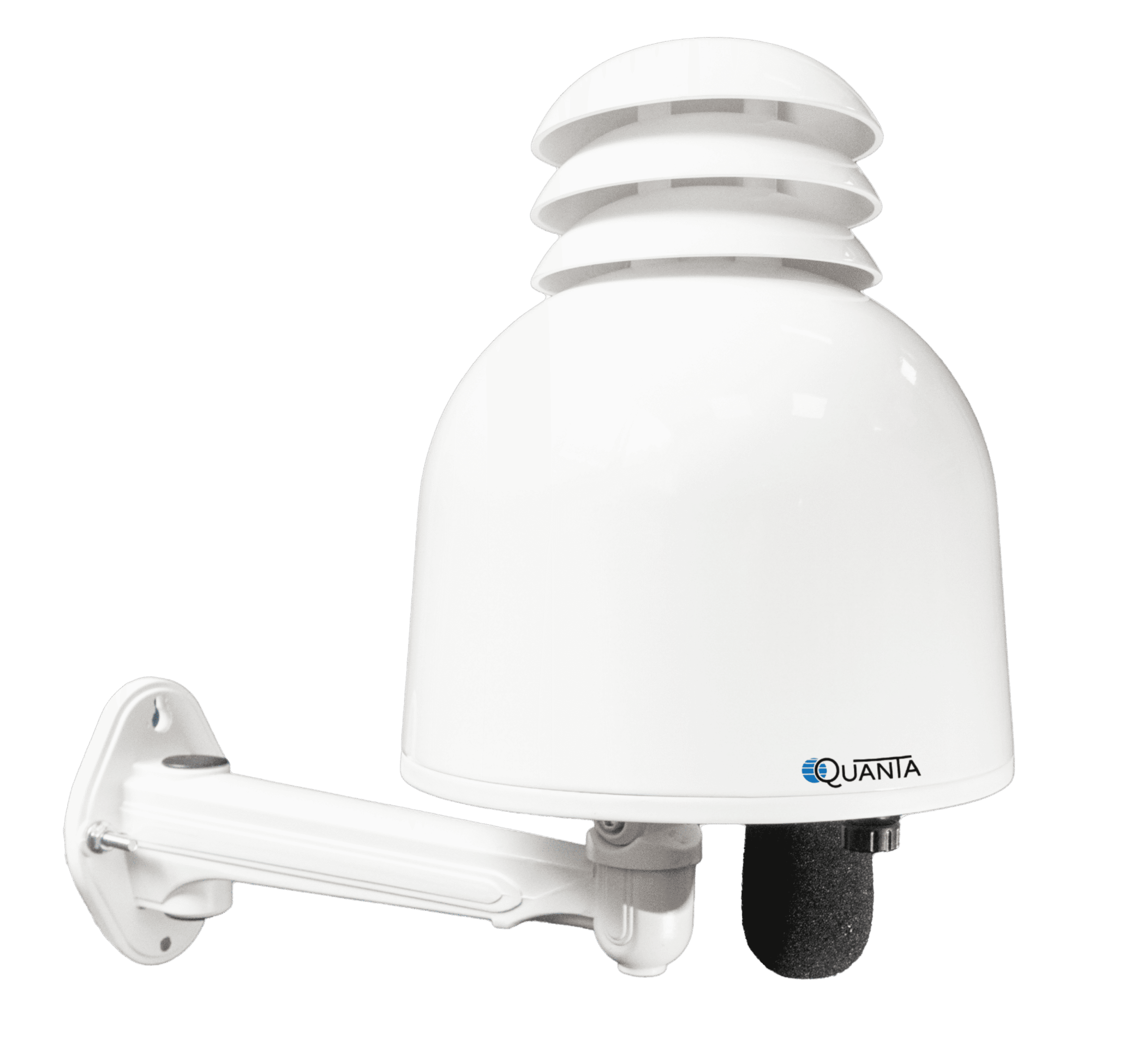
Configurable outdoor stations for continuous measurement of particulate matter, gaseous pollutants and environmental conditions across distributed monitoring networks.

  • Site-specific pollutant configurations
  • Continuous outdoor data acquisition
  • Designed for single-site and multi-node networks

Explore Aernode Monitors
Aernode Cloud
Data infrastructure

Aernode Cloud

A central environment for device supervision, data storage, post-processing and secure access to current and historical monitoring information.

  • Remote network and device management
  • Historical records and data continuity
  • Authenticated integration through APIs
Explore Aernode Cloud
Aernode Sensor Kit
Modular sensing assemblies

Sensor Kits

Preconfigured sensing assemblies that simplify pollutant selection, field servicing and configuration updates throughout the operating life of the network.

  • Modular pollutant combinations
  • Efficient field replacement
  • Configuration tailored to project requirements
Explore Sensor Kits
Aernode reporting tools
Dashboards and reporting outputs

Reporting Tools

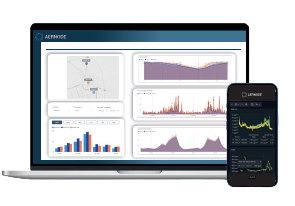
Digital environments for current conditions, historical analysis, automated outputs and communication with internal teams or external stakeholders.

  • Real-time and historical dashboards
  • Threshold alerts and scheduled reports
  • Private and stakeholder-facing environments
Explore Reporting Tools
Aernode deployment accessories
Deployment accessories

Accessories

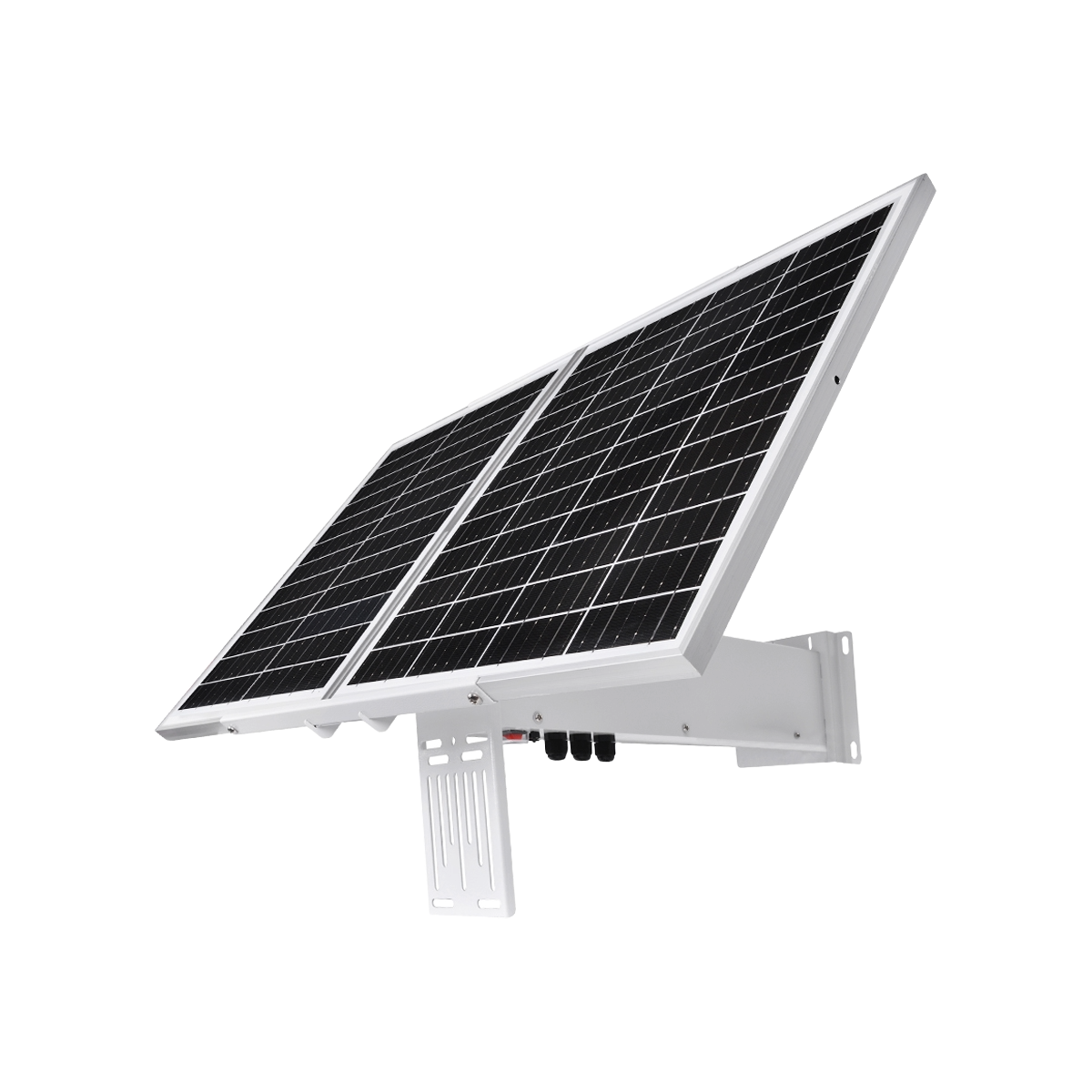
Power, meteorological, mounting and connectivity options for fixed-site, perimeter and off-grid monitoring configurations.

  • Weather stations and anemometers
  • Solar power and autonomous deployment options
  • Mounting and connectivity accessories
Explore Accessories
Intensive farming monitoring configuration

Plan a monitoring network for your livestock facility

Define the right environmental parameters, node placement, connectivity and reporting workflow for continuous monitoring around livestock buildings, manure handling and storage areas, site boundaries and nearby receptors.