
Air Quality Monitoring Resources
Guides, technical articles and field case studies covering sensing technologies, network design, calibration, data quality and environmental monitoring applications.
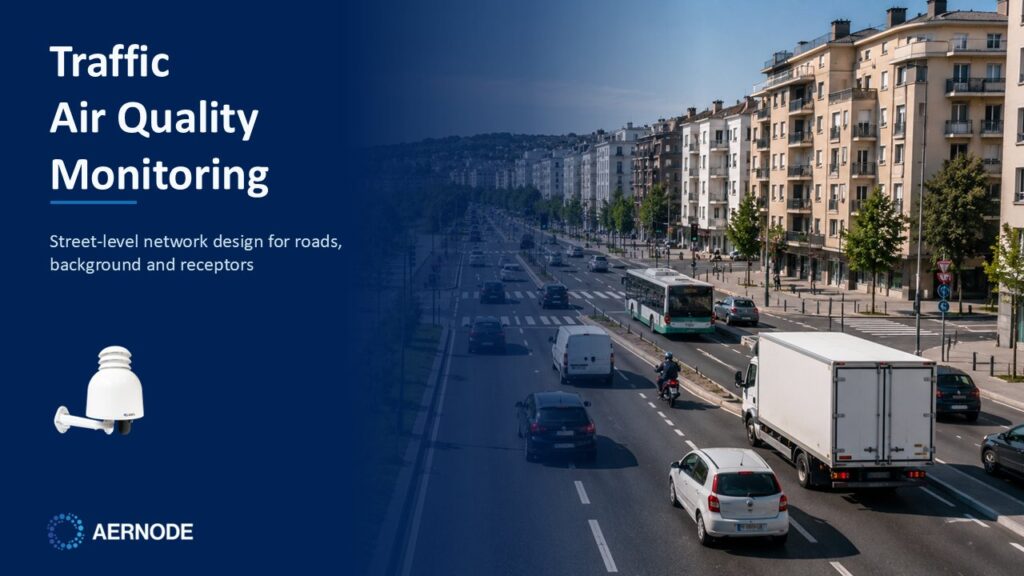
Traffic-Related Air Pollution Monitoring: How to Design a Street-Level Monitoring Network
Learn how to design a street-level traffic air pollution monitoring network, including pollutant selection, roadside siting, background comparison, street geometry, meteorology and data-quality checks.
Read resource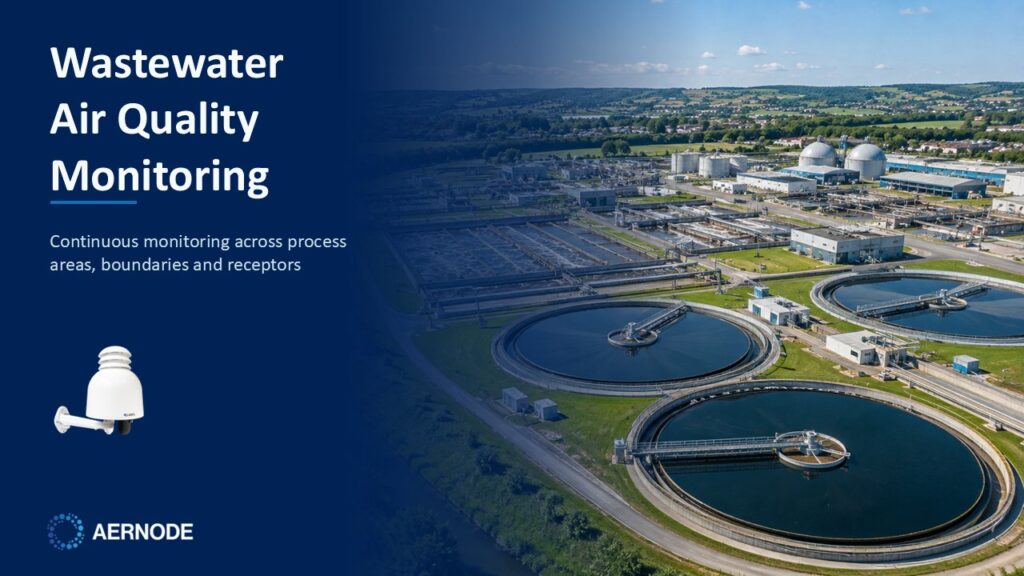
Air Quality Monitoring at Wastewater Treatment Plants: What to Measure, Where and How to Use the Data
Plan continuous air quality monitoring around wastewater treatment plants: choose objectives, parameters and node roles, then connect measurements with meteorology, investigation, QA and reporting.
Read resource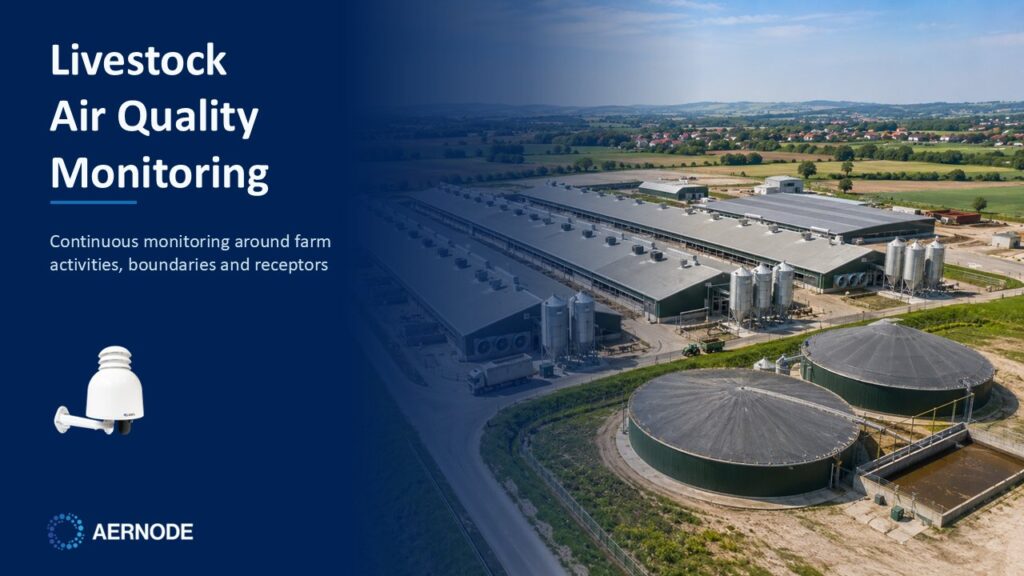
Air Quality Monitoring Around Intensive Livestock Farms: What to Measure, Where and How to Use the Data
Learn how to design continuous outdoor air-quality monitoring around intensive livestock farms, including parameter selection, network siting, meteorology, alerts, data quality and environmental reporting.
Read resource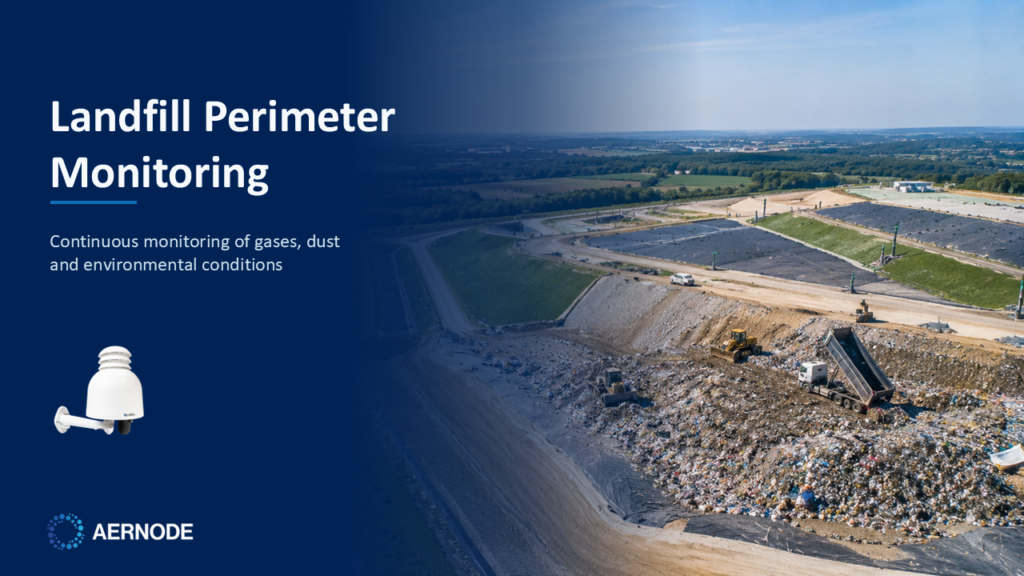
Landfill Odour Monitoring: Building a Continuous Perimeter Monitoring Strategy
Learn how to design continuous landfill odour monitoring around gas indicators, meteorology, perimeter locations and event records—without treating H2S or chemical sensors as direct measures of odour.
Read resource
Continuous Air Quality Monitoring in Ports: How to Design a Practical Network Under the EU Framework
Ports are spatial air-quality monitoring environments. Learn how fixed, indicative and supplementary measurements, meteorology and modelling can be combined to design a practical port network under the EU framework
Read resource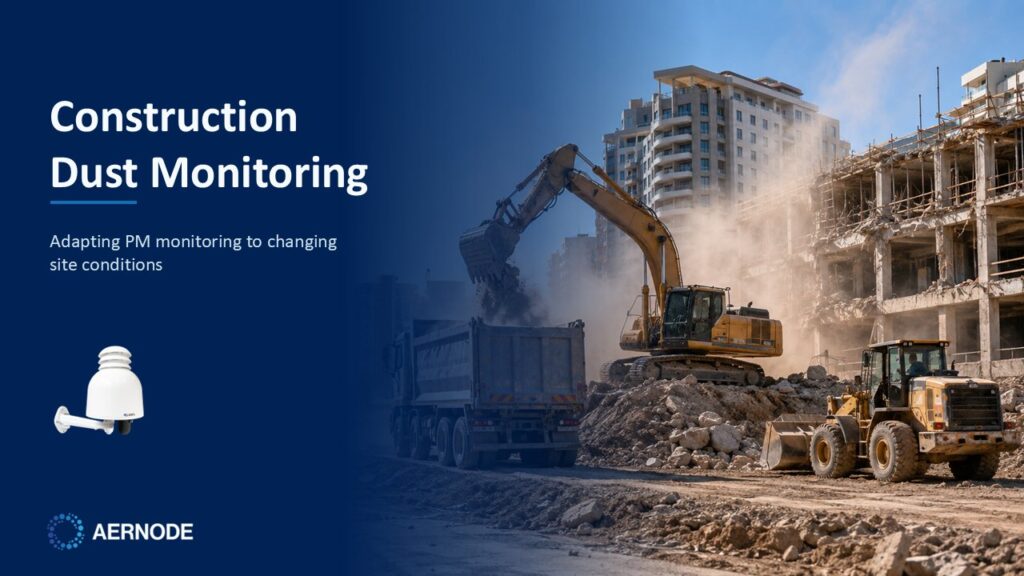
Construction Site Dust Monitoring: How to Build a Practical PM Monitoring Plan
Build a practical construction site dust monitoring plan for PM10 and PM2.5, covering objective-led siting, project phases, meteorology, alerts and data-quality controls.
Read resource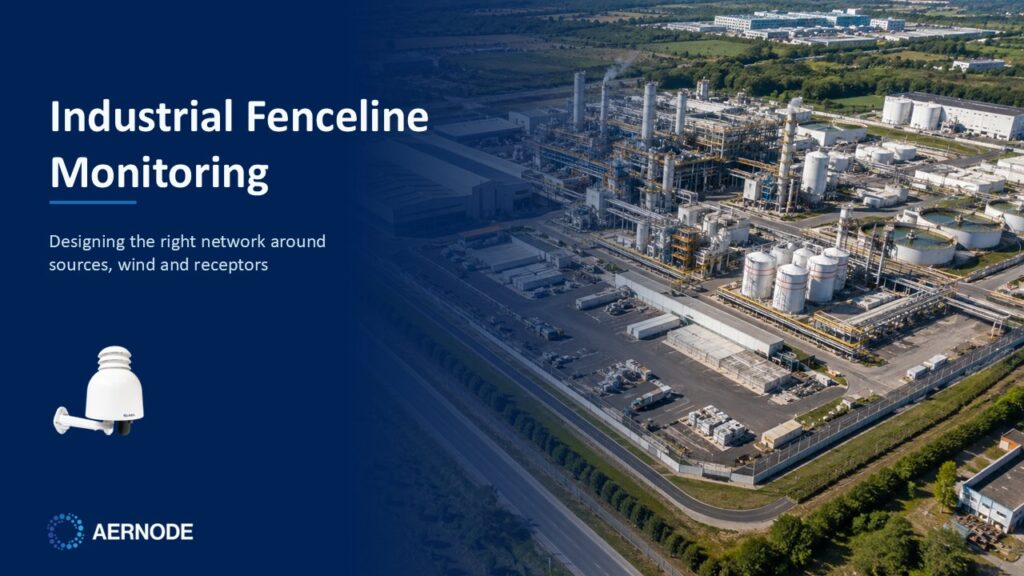
Industrial Fenceline Air Quality Monitoring: What to Measure and How to Design a Network
Learn what industrial fenceline air quality monitoring measures, how to select pollutants and monitoring points, and how wind, QA and alerts shape a practical network.
Read resource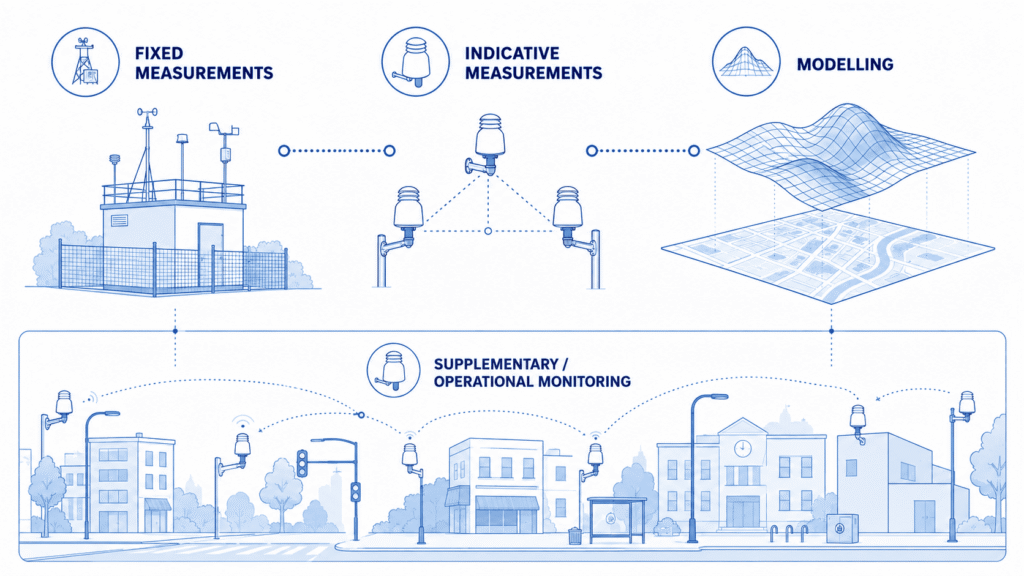
Indicative and Supplementary Air Quality Monitoring: Roles, Uses and Limits
Understand how indicative measurements differ from supplementary air-quality monitoring, what each evidence role can support, and how data quality, calibration and project purpose determine how the measurements should be interpreted.
Read resource
Continuous Environmental Noise Monitoring: Applications, Data and Limits
Understand where continuous environmental noise monitoring fits, what long-term and distributed measurements can reveal, and when a more specialised acoustic assessment may be required.
Read resource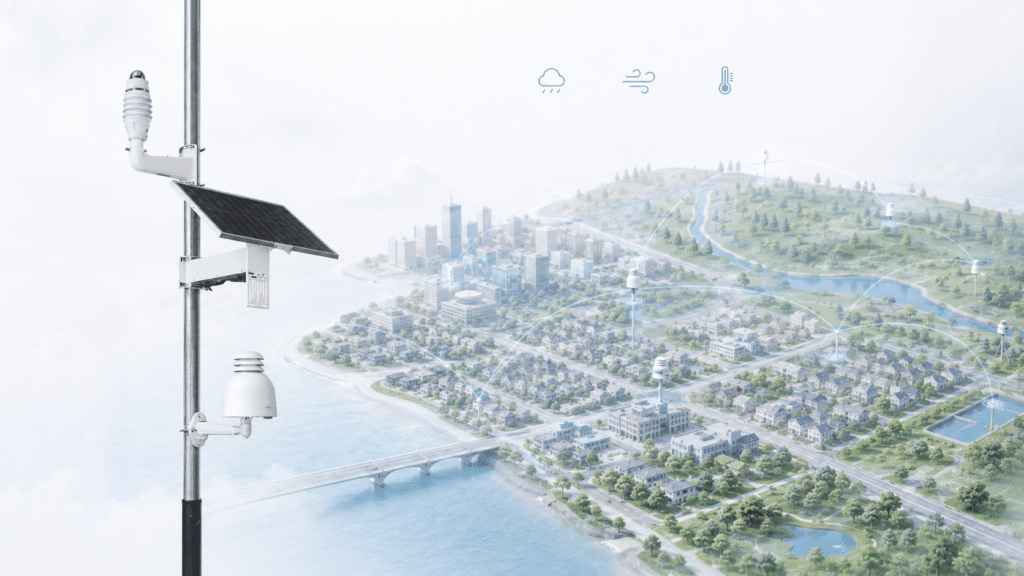
Municipal Weather Monitoring Networks: Temperature, Rainfall, Wind and Local Environmental Data
Learn how municipalities can design local weather monitoring networks for temperature, rainfall and wind, with practical guidance on siting, data quality, integration and operational use.
Read resource
Aernode Data Flow Architecture: Local Modbus, External Server and Aernode Cloud
See how Aernode data can be accessed locally through Modbus, transmitted directly to an external server or managed through Aernode Cloud, and how data state and processing differ across each path.
Read resource
VOC Monitoring with Compact Sensors: MOX and PID Explained
Understand the main VOC measurement approaches, where compact continuous sensors fit, and how MOX and PID technologies provide different outputs for environmental monitoring.
Read resource